Understanding Glass Safety & Maximum Sizes: A Simple Guide for Homeowners and Businesses
When replacing a broken window, upgrading a shower screen, or fitting out a new shopfront, it’s easy to assume glass is just glass. However, under Australian Standard AS 1288 (Glass in buildings – Selection and installation), every pane of glass installed in your home or commercial space must meet strict safety and sizing regulations.
These standards exist to protect people from serious injury caused by accidental impact and to ensure panels withstand structural loads. Here is a straightforward breakdown of how safety glass works, where it’s required, and how panel sizes are calculated.
Key Areas Where Safety Glass is Mandatory
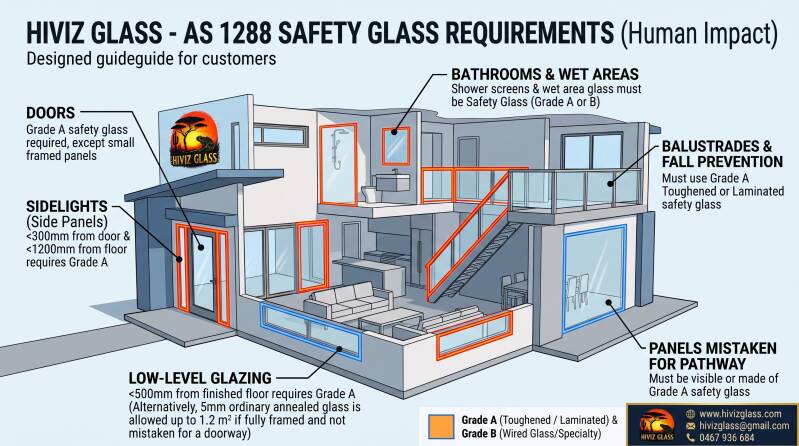
Under AS 1288, specific high-risk locations—known as human impact zones—require Safety Glass (typically Grade A Toughened or Laminated) to prevent sharp, dangerous breakages:
Doors & Sidelights: All glass in doors must be safety glass. Any fixed side panel within 300mm of a door frame and under 1200mm from floor level also requires Grade A Safety Glass.
Low-Level Glazing: Windows where the bottom edge of the glass sits lower than 500mm from the finished floor level must use Grade A Safety Glass. (Note: Fully framed 5mm ordinary float glass is permitted only if the panel is under 1.2 m² and cannot be mistaken for a doorway).
Bathrooms & Wet Areas: All glass in shower screens, ensuite windows, and wet areas must be Grade A or Grade B safety glass.
Panels Mistaken for Passageways: Large, clear, full-height glass panels that someone could walk into thinking it's an open walkway must be Grade A Safety Glass or fitted with a visual marking (manifestation).
Commercial & Public Spaces: High-foot-traffic areas like shopfronts, medical facilities, aged care homes, and special needs facilities carry mandatory Grade A safety glass requirements due to higher collision risks.
Balustrades, Stairways & Ramps: Glass installed on stairways, landings, or acting as a protective barrier against a fall from height requires Grade A Toughened or Laminated safety glass.
HIVIZ GLASS — AS 1288 Safety Glass Quick Reference
Understanding human impact risk zones and safety glass requirements around the home.

Key Safety Takeaways:
- Doors & Sidelights: Must use Grade A safety glass (sidelights within 300mm of door & under 1200mm high).
- Low-Level Windows: Glass under 500mm from floor requires Grade A safety glass (5mm annealed permitted up to 1.2m² if fully framed).
- Wet Areas: All shower screens and wet zone glass must be Grade A or B safety glass.
- Kitchen Splashbacks: Toughened safety glass is highly recommended across all splashbacks to withstand heat from cooktops and power socket cutouts.
Need Expert Glazing Advice or Repair?
Trade qualified, AS 1288 compliant glazing for residential and commercial properties.
📞 0467 936 684 | 🌐 www.hivizglass.com | 📧 hivizglass@gmail.com